IA Insights > Blog
Your Meetings Don't Have to Be This Way


Your Meetings Don't Have to Be This Way
Barry Rosen and Stacy Ferratti hosted a webinar covering common pitfalls meeting leaders and facilitators face in meetings. They had too many questions to handle in that 45-minute session. Below you'll find a recap of their Q&A recording. You can also watch the full recording here. The topics ranged from neutral facilitation to introverts in meetings to why your agenda matters more than you think. If you didn't catch the recording, here's what you missed.
Does neutral facilitation actually fix things?
The first question was whether neutral meeting facilitation is really the key to resolving collaboration problems and building better teamwork. Short answer from Barry: kind of, but not for the reason most people assume.
The idea isn't just that a neutral facilitator runs a cleaner meeting. It's that someone is paying attention to how people are interacting, not just what they're talking about. That distinction, process versus content, is one IA has been teaching for decades. Most collaboration doesn't break down over the substance of a decision. It breaks down over how people tried to get there.
Stacy made a practical point: most teams don't have a neutral facilitator on speed dial. But you don't need one to apply the mindset. If you're a leader who genuinely wants input from your team, that means not walking in with your mind already made up. It means listening before you talk. You're still the leader, the decision may still be yours, but you're creating the conditions for real participation first.
Getting people to actually participate
The next question was about involvement beyond the two most common meeting moves: popcorn (anyone talks when they feel like it) or going around the room in order. What else is there?
Barry's take: start smaller than you think. Before people feel safe contributing to hard questions, they need practice just... talking. Ask simple things. Build the habit of participation on your team so it's already there when you need it.
Stacy added a classic: when in doubt, break out. Put people in pairs or trios and give them a focused task. She told a story about a three-day facilitation class where the participants would say nothing in the main room, then immediately light up the moment they were in pairs.
The other technique worth knowing: give people two minutes to write before the discussion opens. It sounds small, but it makes a real difference for people who need to think before they talk. Not everyone is going to volunteer an idea the second the floor opens. Some people want to know what they actually think first.
Remote and hybrid: collaboration beyond the meeting
Keeping collaboration alive when your team is distributed is harder than it looks, and it's not only about meeting mechanics.
Barry pointed to shared document spaces as an underused tool. Putting questions and ideas into a team room where people can respond on their own time gets around the problem of too many meetings while still keeping people connected to the work.
Stacy went somewhere more human. For teams spread across time zones and cities, you can't assume relationship just happens. You have to build it on purpose. One idea she teaches: a world map in your shared drive with pictures of each teammate, where they are, and a few lines about them. Something that makes the person on the other end of the call feel real.
They also brought up "tea time," short standing meetings with no agenda beyond getting to know each other. Make sure to give it some structure, rotate the time slots so the same group isn't always on at 6am, and consider a buddy system where someone introduces you rather than you having to introduce yourself. That last bit matters more than it sounds.
Keeping people engaged, especially on video
Keeping people engaged in a room is one skill. Keeping them engaged on a video call is a different one.
In person, someone zoning out is obvious. On a call, they can look right at the camera while mentally somewhere else entirely. We've all been there.
The fix is knowing your platform and using it well. Stacy's specific tip (referring to Zoom, but similar in other platforms): if you need people to confirm they're following along, use the green checkmark or raised hand reaction, not the hearts or confetti. The quick reactions disappear after a second or two. The checkmark stays on screen.
She also described a technique for setting the tone early: ask an open question and have everyone respond in chat. Do that in the first few minutes and people quickly understand this isn't a passive experience.
Don't call people out. Signal the norm.
This one deserves its own moment because the framing is worth keeping.
When you call on someone in a meeting, you're not trying to embarrass them. You're signaling how this room works. We participate here. That's the norm. Getting that signal in early, whether by calling on someone, asking for a show of hands, or putting a question in the chat, tells everyone what to expect without a long preamble about participation guidelines.
Barry's word for it: telegraph. Tell people what you're going to do before you do it. Tell them how to participate before you need them to.
Agenda or facilitation?
Someone asked whether a better agenda or better in-the-moment facilitation matters more for fixing a dull meeting. Our answer: they're equally important, and you need both.
An agenda is a roadmap. You might not follow it exactly, and that's fine. But without it, you're winging the whole thing. Good facilitation is what keeps you honest when things go sideways, helping the group see where they are in the process and figure out the next best move together.
What does "blah" actually mean?
One question we received was around how to improve a "blah" meeting. You know the one, it's quite boring, nothing seems to be getting accomplished and people are talking in circles. Before you can fix a blah meeting, you have to figure out what's making it blah. Is someone monologuing? Is the meeting too long? Are the wrong people in the room?
Stacy told a story from her own experience running long team meetings. A team member asked if they could split two hours into two one-hour sessions instead. Stacy's first instinct was no. What she heard was a request for less time. What the person actually wanted was more manageable chunks. Once she asked a follow-up question, it clicked.
The 25/55-minute rule
Barry has a simple rule he stands behind: never schedule a meeting for 30 or 60 minutes. Schedule it for 25, or if it needs to be longer, go for 50-55.
The logic is practical. A few people will be late, so you're really designing for 20 or 50 minutes of actual content. This shorter time forces you to be realistic about what you can accomplish. You're not going to solve the whole problem in a 20 or 50 minutes, but you can get agreement on what the problem is and what to do next.
One last thing
Stacy closed with an idea she remembered from a book about online meetings, the claim that something needs to change every seven seconds to hold people's attention in a virtual setting. She thinks that's a bit extreme, but the underlying point stands. If you're running a meeting, virtual or otherwise, your job is to keep changing the format enough that people don't drift. It's all about attention management.
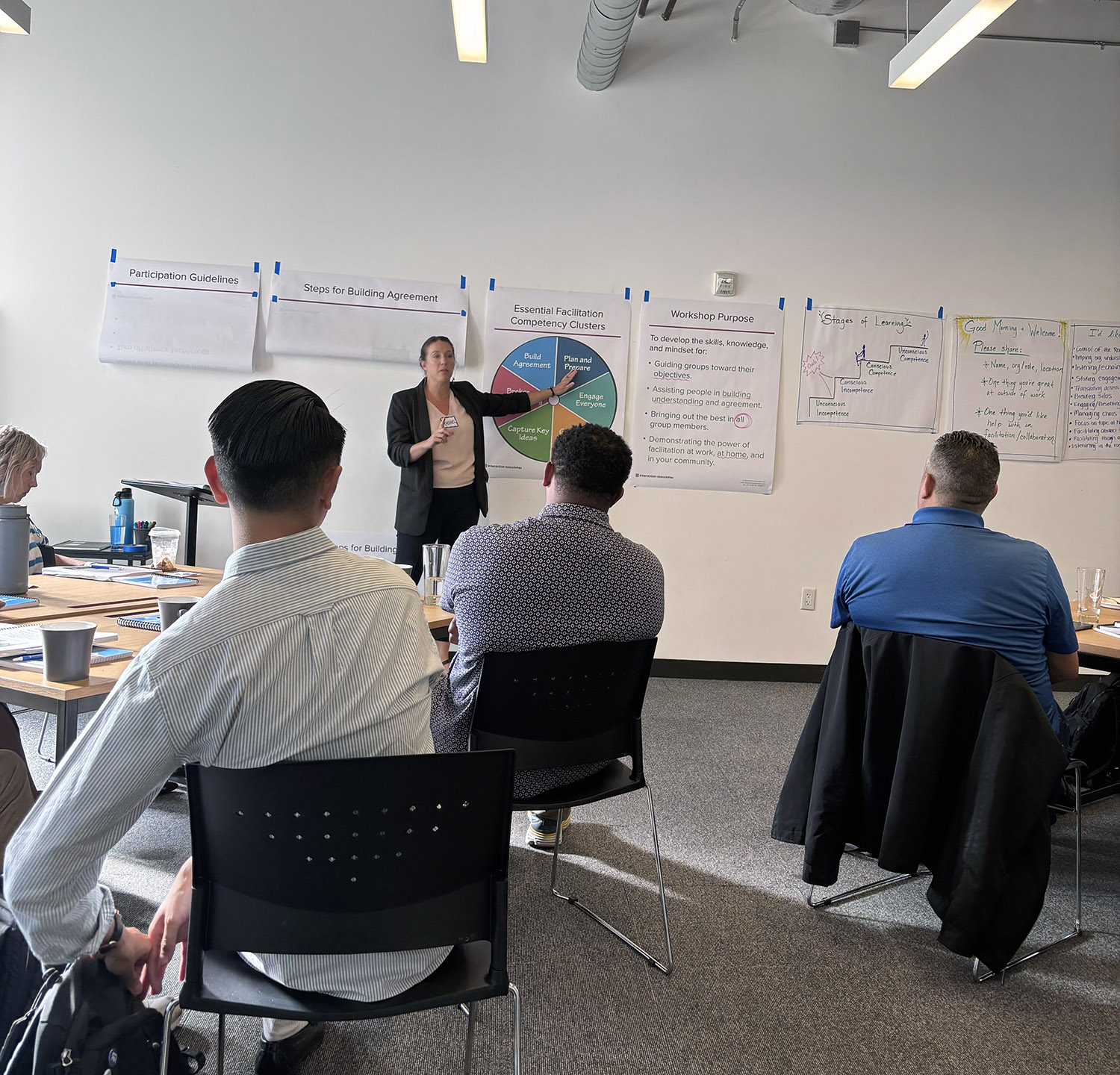
Keep these tips in mind when you're facilitating your next meeting. And if you're looking for expert facilitation training, check out our popular program Essential Facilitation™.
About IA Team
Interaction Associates (IA) helps leaders and teams think more clearly, collaborate more effectively, and focus on what matters most to their customers, employees, and stakeholders. We provide our clients with practical methods for helping people work better together across functions, viewpoints, and geographies. Since IA introduced the concept and practice of group facilitation to the business world in 1969, hundreds of thousands of individuals have learned The Interaction Method™, a facilitated approach for building understanding and agreement so people can take informed, concerted action.