IA Insights > Blog
Essential Facilitation vs. Traditional PM Training: What's the Difference?


Essential Facilitation vs. Traditional PM Training: What's the Difference?
If you've taken traditional PM training, you learned frameworks. Gantt charts. How to structure a project plan. Risk matrices. Budget forecasting. All useful stuff.
While this is great, most of that training isn’t focusing on managing people, it’s focused on managing tasks.
Where Projects Tend to Fail
Think about your last three projects that went off track. Was it because your Gantt chart was wrong? Or was it because stakeholders had different ideas about what success looked like, and nobody said it out loud until it was far too late?
Most project failures tend to happen in the conversations, rather than in the methodology.
About 75% of your job is communication, alignment, and navigating politics. Getting people to clarify what they actually want. Helping them commit instead of nodding politely. Surfacing problems early when they're still fixable.
The other 25% is methodology and tools.
How Essential Facilitation™ Is Different
Essential Facilitation for Project Managers is built for the 75%.
Traditional PM Training focuses on:
- Methodology and frameworks
- Assumes everyone will cooperate
- Tools (Gantt charts, budgets, timelines)
- Good for the planning phase
Essential Facilitation focuses on:
- How to get people to align
- Prepares you for organizational politics
- People and conversations
- Good for the entire project lifecycle
In traditional training, you learn the structure of a project. In Essential Facilitation, you learn how to facilitate the conversations that make projects work.
What This Looks Like in Practice
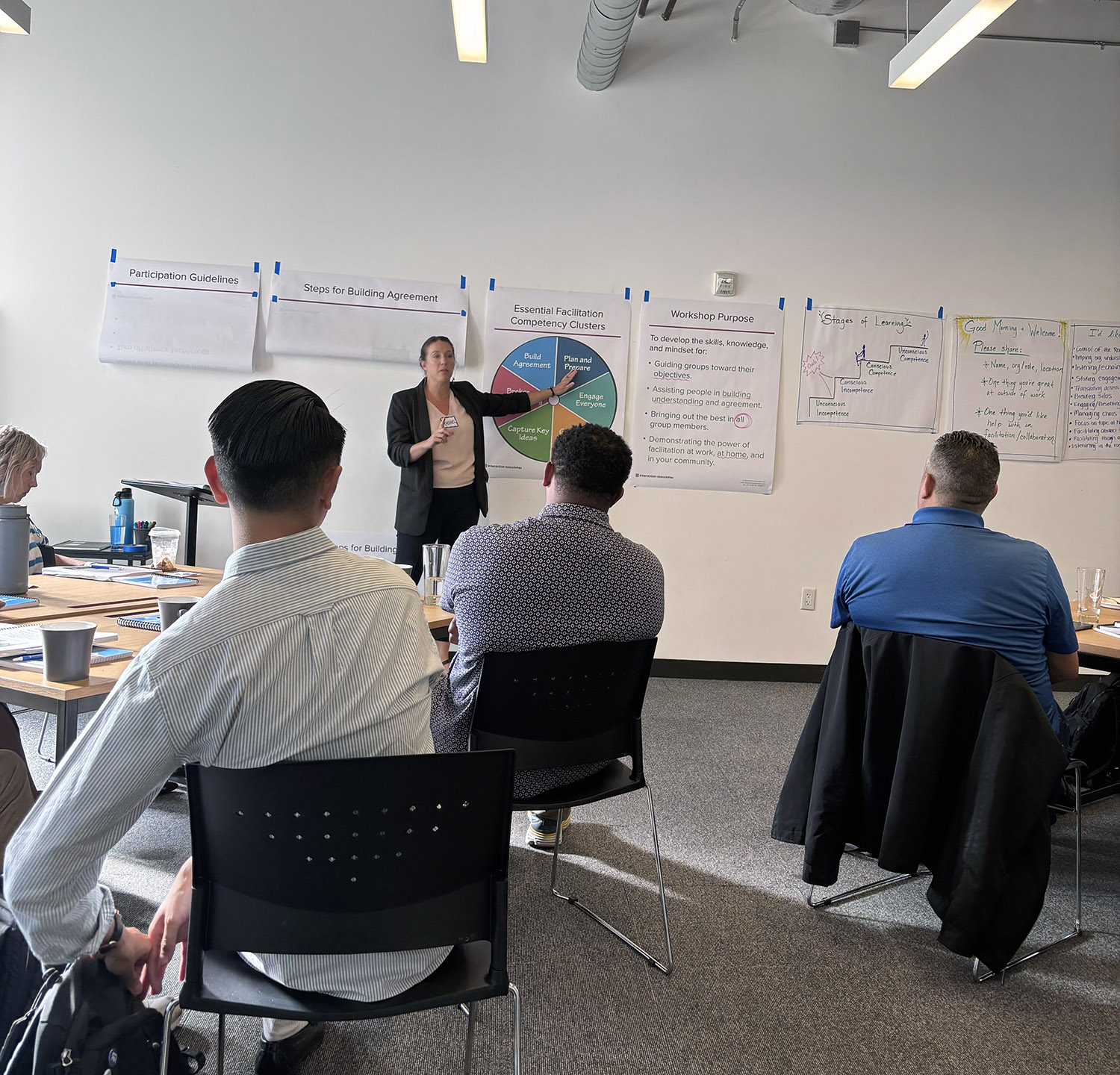
Essential Facilitation teaches you how to run develop a kickoff agenda and build the process out so stakeholders surface what they disagree about instead of hiding it. So you know on day one what misalignment exists, not three months in. This is done through various tools and techniques provided during the training.
With these tools and techniques, risks will be surfaced much earlier and you’ll be able to solve for them before they come back to bite you down the road.
Essential Facilitation will also teach you how to facilitate conversations about scope so stakeholders commit to what's realistic instead of signing up for impossible timelines.
Who Needs This
If you spend most of your time in meetings trying to get alignment, if you find yourself clarifying requirements that were "already decided," if stakeholders commit in the room and then do something different, you need Essential Facilitation.
Where to Start
Download our PM Survival Toolkit to get some of these skills right away. It includes a Stakeholder Map template and a Kickoff Agenda designed to surface misalignment early.
Or jump straight in: Check out our upcoming Essential Facilitation for Project Managers live-online training or download the program description and learn how to bring this into your organization.
About IA Team
Interaction Associates (IA) helps leaders and teams think more clearly, collaborate more effectively, and focus on what matters most to their customers, employees, and stakeholders. We provide our clients with practical methods for helping people work better together across functions, viewpoints, and geographies. Since IA introduced the concept and practice of group facilitation to the business world in 1969, hundreds of thousands of individuals have learned The Interaction Method™, a facilitated approach for building understanding and agreement so people can take informed, concerted action.